
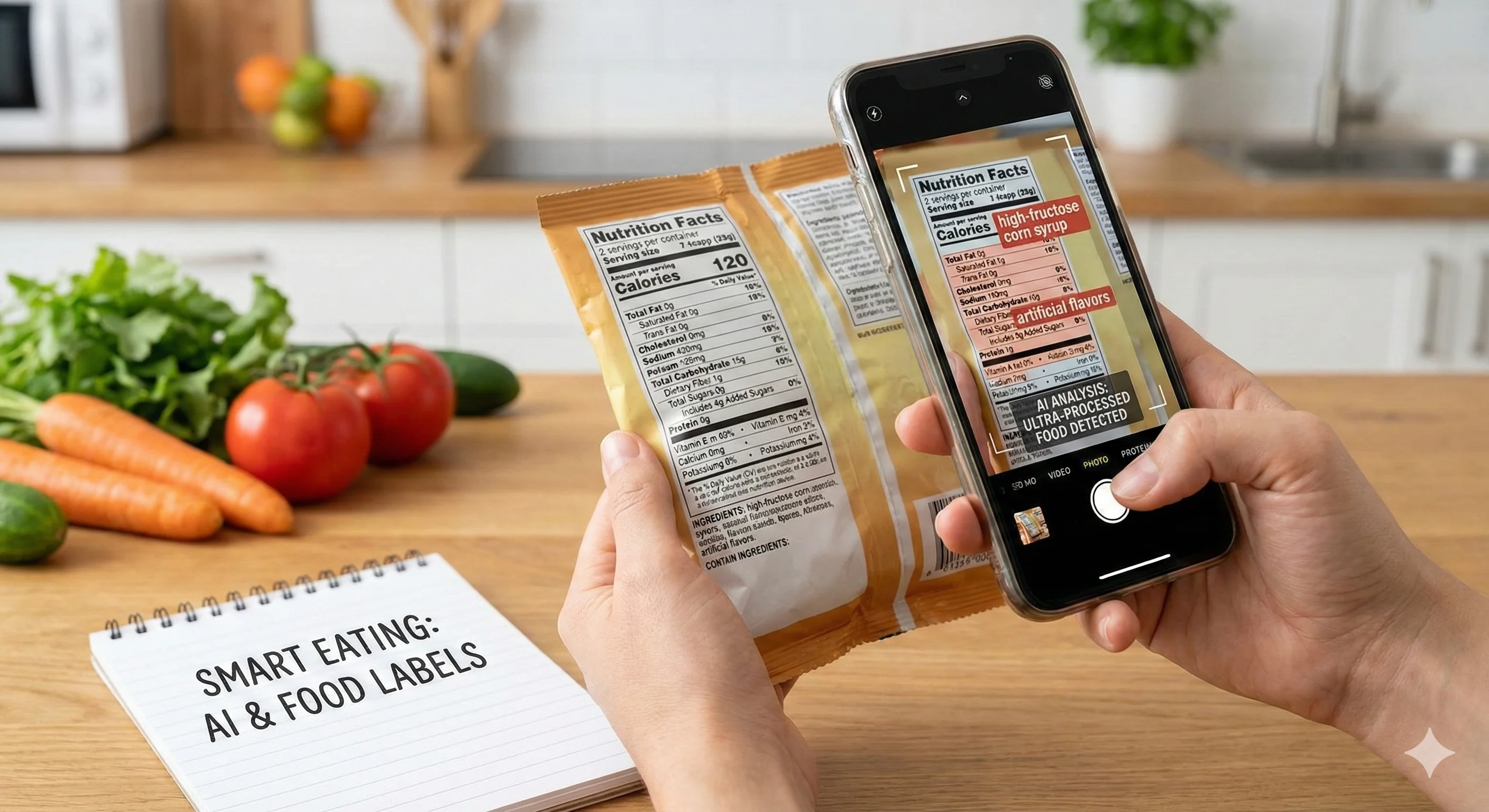
Use AI to Decode Your Food Labels (and Ditch the Ultra-Processed Junk)
Snap a photo of any ingredient list and let AI tell you exactly what's hiding in your food—and what to eat instead.
You pick up a granola bar that says "natural" on the front. You flip it over, and the ingredient list reads like a chemistry exam. Maltodextrin? Sodium stearoyl lactylate? You have no idea whether these are harmless or something you should avoid, so you shrug and toss it in the cart.
Sound familiar? Most of us have been there. The average American eats a diet that's nearly 60% ultra-processed foods, and a big reason is that ingredient labels are designed to be technically accurate but practically unreadable. This is exactly the kind of problem AI is built to solve.
How It Works
Every major AI assistant—ChatGPT, Claude, Gemini—can read and analyze ingredient lists. You have two options: type the ingredients in, or simply take a photo of the label and upload it directly. The AI will use vision capabilities to read the label for you. No manual entry required.
Once you've captured the ingredients, the real magic is in telling AI exactly what you want back. Here's the prompt that does the heavy lifting:
Most people ask AI "is this food healthy?" and get a vague answer. This prompt forces specificity—ingredient-by-ingredient analysis, real health concerns with context, and an actionable swap you can make immediately. The rating system also gives you a quick gut check for comparing products at the store.
What AI Actually Finds
When you run this prompt against common packaged foods, the results are eye-opening. Here's a sample of ultra-processed ingredients AI frequently flags, along with why they matter and what to use instead:
| Ingredient | Why It's a Concern | Better Swap |
|---|---|---|
| High Fructose Corn Syrup Sweetener | Linked to insulin resistance, fatty liver disease, and increased appetite because it bypasses normal satiety signals | Swap Honey, maple syrup, or whole fruit |
| Maltodextrin Filler | Spikes blood sugar faster than table sugar (high glycemic index) and may disrupt gut bacteria balance | Swap Oat flour or tapioca starch in smaller amounts |
| Sodium Nitrite Preservative | Used in processed meats; can form nitrosamines during cooking, which are classified as probable carcinogens | Swap Uncured meats or fresh-cooked proteins |
| Carrageenan Thickener | Associated with gut inflammation and digestive discomfort in some studies; used to give texture to dairy alternatives | Swap Products thickened with gellan gum or choose brands without it |
| Artificial Colors (Red 40, Yellow 5) Coloring | Derived from petroleum; some studies link them to hyperactivity in children and allergic reactions | Swap Products colored with beet juice, turmeric, or spirulina |
| Soybean Oil / Canola Oil Industrial Seed Oil | Highly refined, high in omega-6 fatty acids which may promote inflammation when consumed in excess | Swap Extra virgin olive oil, avocado oil, or butter |
This isn't about perfection—it's about awareness. Once you see the pattern, you start noticing that most ultra-processed ingredients exist to extend shelf life, reduce manufacturing costs, or improve texture—not to make the food better for you.
Level Up: The Comparison Prompt
Once you get comfortable analyzing individual products, the next step is comparing options side by side. Try this follow-up:
AI is remarkably good at pattern recognition across ingredient lists. It can spot when two products use different names for essentially the same additive (like "natural flavors" vs. specific flavor compounds), flag when a "healthy" product actually has more processed ingredients than the regular version, and identify marketing tricks like listing sugar under five different names to push it further down the label.
A Few Things to Keep in Mind
AI is an excellent first-pass research tool for food labels, but it's not a replacement for a nutritionist or dietitian. It can occasionally overstate risks for ingredients that are well-studied and considered safe in normal amounts (like lecithin). Use it as a starting point for awareness, not as a medical diagnosis. If you have specific health conditions or dietary needs, bring your AI-generated analysis to a conversation with your doctor—it makes for a much more productive discussion than walking in empty-handed.
Build a running list. Every time you analyze a product, ask AI to add the results to a simple table: product name, processing rating (1-5), worst offender ingredients, and the swap you chose. After a few weeks of grocery trips, you'll have a personalized cheat sheet that makes clean eating automatic—no more re-analyzing the same products every time you're at the store.