The Magic That's Missing
Every parent knows the bedtime story routine. You pull out a book about talking animals, brave knights, or magical creatures. Your child listens, maybe asks questions, but they're hearing about someone else's adventure. What if the hero of the story was their best friend Emma? What if their own dog Max was the brave companion? What if their grandmother was the wise guide?
That's the kind of magic that makes kids truly engage with stories. When children see themselves and their world reflected in the tales they hear, something special happens. They lean in closer, ask more questions, and remember the lessons longer.
Why Personalized Stories Matter
Generic bedtime stories are fine, but personalized ones create stronger emotional connections. When your four-year-old hears about "Sophia and her golden retriever Bailey going on an adventure," they're not just listening—they're experiencing. The characters aren't abstract; they're real people and pets they love.
Personalized stories also help children process their own experiences. Did your daughter start preschool this week? A story about "Emma's first day at her new school with her friend Lily" becomes a way to talk about feelings and build confidence. It's therapy wrapped in entertainment.
How to Create Custom Bedtime Stories
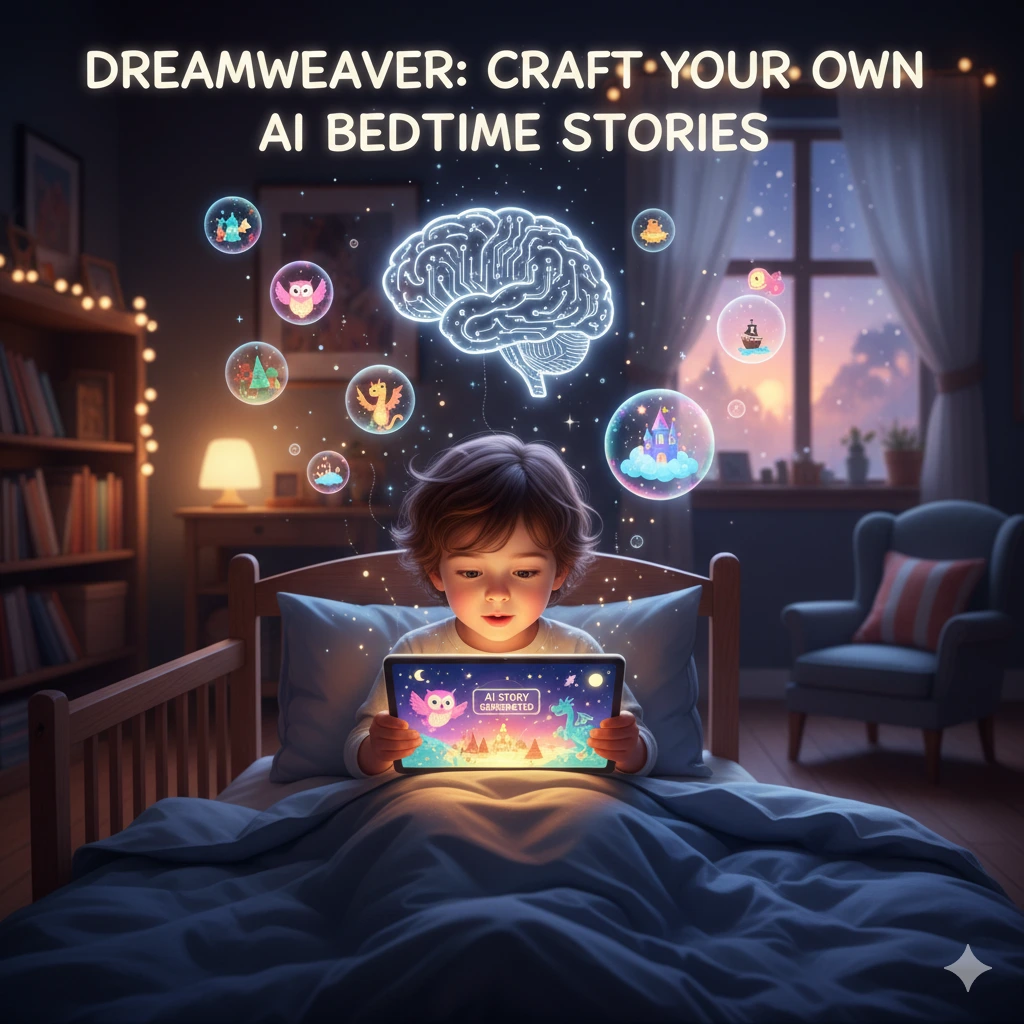
You don't need to be a writer to create these stories. AI tools like ChatGPT or Claude can generate personalized bedtime stories in seconds. The key is giving the AI the right details about your child's world, then letting it weave those elements into an age-appropriate tale.
The process is straightforward. You provide the names, relationships, and key details. Then you specify the story elements—adventure, lesson, or theme. The AI creates a complete story that feels tailor-made because it is.
You can generate a new story every night or create variations on favorites. "Tell me another story about when Grandma and Max found the magic garden" becomes an instant sequel.
SAMPLE PROMPT
"Create a 5-minute bedtime story for a 4-year-old girl named Sophia. Include her best friend Emma, her golden retriever Bailey, and her grandmother Nana Rose. The story should be about overcoming fears. Make it gentle and end with everyone safe at home."
Real Example
Let's say your son Jake (age 5) loves dinosaurs and has a cat named Whiskers. His best friend is Noah, and they just learned about sharing at school.
Instead of reading a generic dinosaur book, you use this prompt: "Write a bedtime story for 5-year-old Jake about him and his friend Noah discovering friendly dinosaurs in the backyard. His cat Whiskers helps them learn about sharing. Keep it 5 minutes long and appropriate for bedtime."
WHAT YOU GET
The AI generates a complete story where Jake and Noah find baby dinosaurs who need help, Whiskers teaches everyone about taking turns with toys, and everyone learns that sharing makes playtime more fun. The story uses Jake's real name, includes his actual cat, and reinforces the lesson he's learning in school—all wrapped in his favorite theme.
QUICK TIPS
- Include real names, pets, and family members to maximize engagement
- Specify your child's age so the story complexity matches their level
- Choose themes that reinforce current lessons or address specific fears
- Request a specific length (3-minute, 5-minute, or 10-minute stories)
- Always end with "everyone safe at home" for peaceful bedtime transitions
Making It Part of Your Routine
Once you see how easy this is, you can create themed story series. "Monday adventures with Grandpa," "Whiskers' wisdom Wednesdays," or "Friday stories about school friends." You can even involve your child in choosing the adventure type each night.
Save the stories you generate. Create a document with your favorites, and your child can request repeats of stories they loved. Some parents even illustrate these with AI image generators and create simple printed books.
The Bottom Line
KEY TAKEAWAY
AI makes it effortless to transform bedtime stories from generic tales into personalized adventures featuring your child's real world. The result? More engagement, stronger emotional connections, and a unique way to reinforce important lessons through characters they actually know and love.
Want to learn more? Check out Practical AI for Humans for more practical guides on using AI effectively.