
The challenge
You need deep intelligence on a company—maybe you're preparing for a sales call, evaluating a potential employer, researching a competitor, or conducting due diligence on a business partner. You could spend hours clicking through news articles, financial reports, LinkedIn profiles, and court databases. Or you could let ChatGPT's Deep Research function do the heavy lifting for you.
Most people use AI for quick questions and simple tasks. But ChatGPT's Deep Research feature excels at something more powerful: comprehensive, multi-source investigations that would normally take a skilled analyst hours to complete. The key is knowing how to structure your request to get professional-grade business intelligence reports.
Why this matters
Professional-grade business intelligence used to require either expensive research services or significant time investment. Now, with the right prompt, you can get comprehensive company profiles in minutes that include:
- Executive leadership backgrounds and recent changes
- Financial performance trends and key metrics
- Legal exposure and regulatory compliance issues
- Media sentiment and recent developments
- Competitive positioning and market perception
This matters whether you're in sales, job hunting, competitive intelligence, or investment research. Understanding a company deeply before you engage can be the difference between a productive conversation and a wasted opportunity.
How to use the Business Deep Research Prompt with ChatGPT
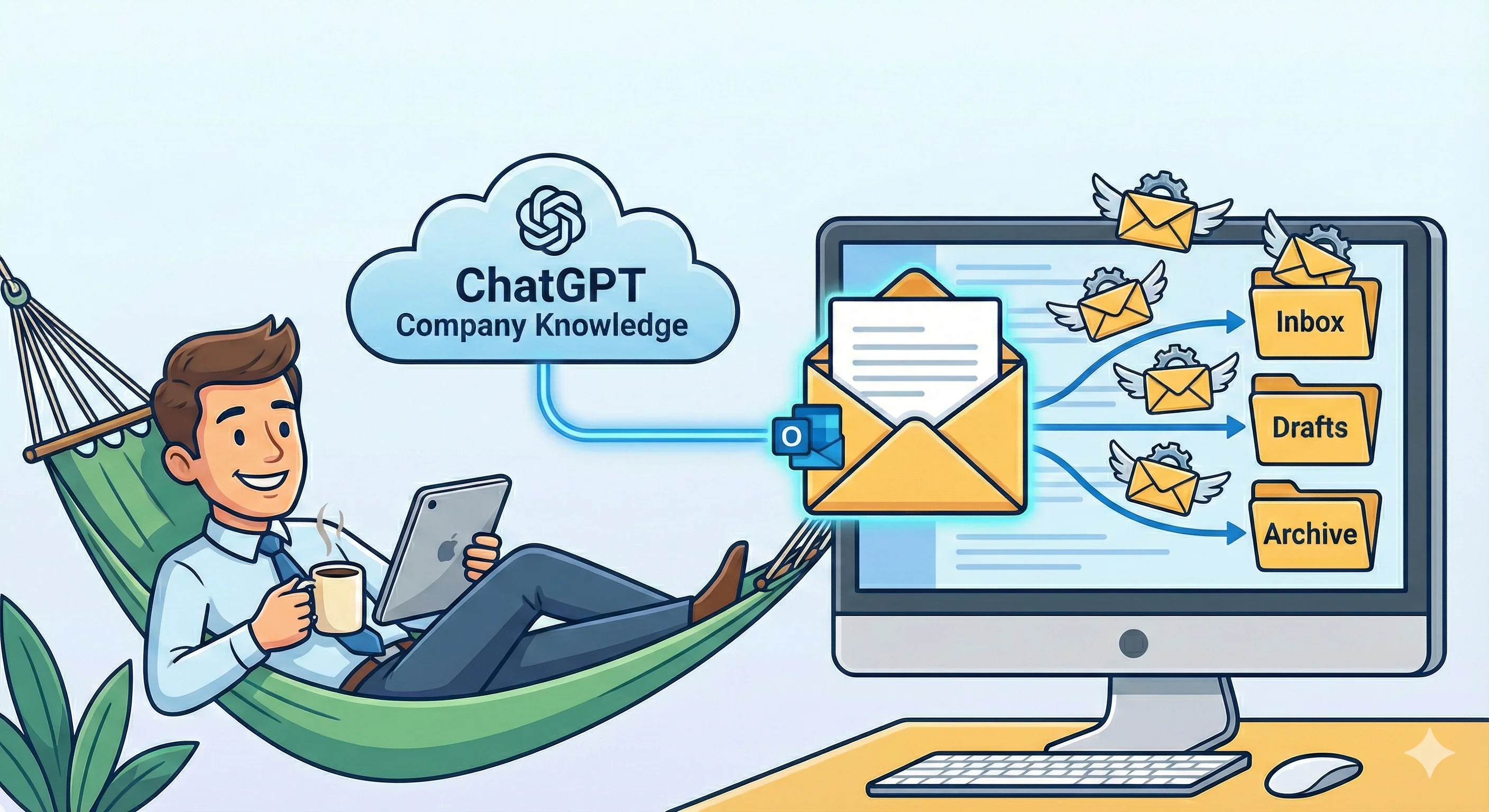
This prompt transforms ChatGPT's Deep Research function into your personal business intelligence analyst. Deep Research is ChatGPT's advanced feature that conducts extended research sessions, pulling from multiple sources and synthesizing findings into comprehensive, well-structured reports.
Step 1: Copy the prompt and customize it
The prompt includes specific sections and formatting instructions that ensure you get consistent, professional results. You'll simply replace "[Insert Company Name Here]" with your target company.
Step 2: Use ChatGPT's Deep Research feature
Paste the customized prompt into ChatGPT and select the Deep Research option. ChatGPT will spend several minutes conducting comprehensive research, performing multiple searches, synthesizing information from various sources, and compiling everything into your structured report. You'll see progress updates as it works through different research phases.
Step 3: Review and verify critical details
AI is excellent at gathering and organizing information, but always verify key facts—especially financial data, legal claims, and leadership information—through original sources when making important decisions.
Real-world use cases
Use case 1: Sales prospecting and preparation
SCENARIO: You're a B2B sales professional about to call on a potential client. You need to understand their business model, recent challenges, and who the decision-makers are before your first meeting.
PROMPT
You are an advanced business intelligence research analyst specializing in corporate investigations and competitive profiling. Your task is to conduct deep web research to produce a comprehensive Business Profile Report on [Target Company Name].

[Follow with the complete prompt structure from the template]
WHAT YOU GET
- Executive team profiles with tenure and backgrounds—so you know who to approach and what matters to them
- Recent news and media coverage showing current priorities and pain points
- Financial health indicators revealing budget capacity and growth trajectory
- Competitive positioning that helps you frame your value proposition
Why this helps: You walk into the conversation knowledgeable about their business, speaking the language of their current challenges, and positioned to address what actually matters to the decision-makers.
Use case 2: Job hunting and interview preparation
SCENARIO: You have an interview with a company you're excited about. Beyond the basics on their careers page, you want to truly understand the organization—its culture signals, financial stability, and whether leadership changes might impact your potential role.
ACTION
- Run the Business Deep Research Prompt for your target company
- Pay special attention to the Leadership Team section for interviewer backgrounds
- Review the News and Media Coverage section for recent initiatives and challenges
- Check the Financial Information section for growth signals and stability indicators
WHAT YOU GET
- Insights into company culture based on leadership backgrounds and public statements
- Financial stability indicators that signal job security
- Recent strategic shifts that might create new opportunities or challenges for your role
- Informed questions to ask that demonstrate genuine interest and research
Interview advantage: When you reference a recent product launch, ask thoughtful questions about a strategic partnership mentioned in the news, or connect your experience to a leader's known priorities, you stand out from candidates who only read the company's About page.
Use case 3: Competitive intelligence for strategic planning
SCENARIO: You're developing competitive strategy and need comprehensive profiles of key competitors—not just what they sell, but how they're positioned, their financial trends, and where they might be vulnerable.
STRATEGY
- Run the prompt for each major competitor
- Compare leadership team sections to identify talent movements and expertise gaps
- Analyze financial trends to spot companies under pressure or gaining momentum
- Review legal and compliance sections for operational weaknesses
- Track media sentiment to understand market perception
WHAT YOU GET
- Side-by-side competitive profiles showing relative strengths and weaknesses
- Pattern recognition across competitors (similar challenges, emerging trends)
- Strategic opportunities where competitors are vulnerable or distracted
- Early warning signals of competitive threats or market shifts
Strategic value: Instead of reactive competitive analysis, you develop a nuanced understanding of the competitive landscape that informs product development, go-to-market strategy, and resource allocation decisions.
Use case 4: Due diligence for partnerships or investments
SCENARIO: Your company is considering a strategic partnership, acquisition target, or vendor relationship. You need to quickly assess risks and validate representations before deeper due diligence.
DUE DILIGENCE FOCUS
- Run the full Business Deep Research Prompt
- Scrutinize the Legal and Compliance Profile section for red flags
- Verify claimed financial performance against public sources
- Check media coverage for unreported issues or controversies
- Evaluate leadership stability and track records
WHAT YOU GET
- Comprehensive risk profile highlighting legal exposure and compliance issues
- Validation (or contradiction) of financial claims and growth stories
- Leadership background verification and stability assessment
- Reputational risk indicators from media analysis
- Cited sources for every major claim, enabling deeper verification
Risk mitigation: You identify potential deal-breakers early, focus expensive legal and financial due diligence on actual risks, and enter negotiations with realistic expectations based on verified information.
What makes this prompt effective
This isn't just asking AI "tell me about Company X." The prompt works because it includes specific structural requirements that guide the AI to conduct thorough, organized research:
KEY DESIGN ELEMENTS
- Role definition: Positions the AI as a "business intelligence research analyst" which activates relevant knowledge and research behaviors
- Structured sections: Breaks the report into distinct, logical components that ensure comprehensive coverage
- Specific data requirements: Lists exact information types (revenue figures, key ratios, leadership tenure) preventing vague or incomplete responses
- Citation requirements: Demands sources for claims, making verification possible and improving accuracy
- Format specifications: Requires tables and bullet points for scannable, professional output
- Sentiment analysis: Asks for categorization of media coverage as positive, neutral, or negative
The prompt essentially creates a research framework that ensures consistent, professional-grade output regardless of which company you're researching.
Adapting the prompt for your needs
While the prompt works as-is, you can customize sections based on your specific use case:
For sales prospecting
- Expand the Leadership Team section to include sales and marketing executives
- Add a "Recent Initiatives and Challenges" section focused on operational pain points
- Request information about technology stack and vendor relationships
For job hunting
- Add an "Employee Reviews and Culture" section pulling from Glassdoor and similar sources
- Expand media coverage to include employee-related news and workplace recognition
- Request information about growth trajectory and hiring patterns
For investment research
- Expand the Financial Information section with detailed ratio analysis and peer comparisons
- Add a "Risks and Challenges" section synthesizing concerns from multiple sources
- Request information about institutional ownership and recent insider trading
For competitive analysis
- Add a "Product and Service Portfolio" section with detailed offerings
- Include a "Market Position and Strategy" section analyzing competitive positioning
- Request customer reviews and market share estimates where available
Tips for best results
FOR BEST RESULTS
- Use ChatGPT's Deep Research feature: This prompt is specifically designed for ChatGPT's Deep Research function, which conducts extended research sessions rather than quick queries
- Be specific with company names: Use the full legal name when possible to avoid confusion with similarly named entities
- Verify critical information: Deep Research aggregates from multiple sources efficiently, but double-check important facts through original sources
- Save and compare: Run the prompt periodically on key companies to track changes and trends over time
- Combine with human expertise: Use the report as a starting point for deeper investigation, not as a replacement for expert analysis
- Allow time for research: Deep Research typically takes 5-10 minutes to complete—it's conducting real research, not just quick searches
REMEMBER
- This is a research tool, not a decision-making tool—always apply critical thinking to the results
- Public information has limits—private companies will have less available data
- AI can sometimes misinterpret nuance or context—especially important for legal and financial matters
- The quality of results depends on what's publicly available—even great prompts can't create data that doesn't exist
Limitations to know about
While this prompt produces impressive results with ChatGPT's Deep Research, it's important to understand its boundaries:
Data availability constraints: Private companies have limited public information. Family-owned businesses, startups, and non-profits may have sparse financial data and leadership details available.
Information recency: Even with Deep Research's web access, the most recent developments (especially from the past few days) might not be fully captured in all sources. Always check dates on cited sources.
Interpretation accuracy: ChatGPT's Deep Research excels at gathering and organizing information but can sometimes misinterpret context, especially in complex legal or financial situations. Don't rely solely on AI interpretation for high-stakes decisions.
Citation reliability: While the prompt demands citations, always verify that cited sources actually support the claims made. Occasionally AI can misattribute or mischaracterize source material.
Bias in source selection: Deep Research searches and selects from available sources, which may have their own biases. Be particularly cautious with sentiment analysis and reputational assessments.
Not a substitute for professional services: For critical business decisions like major investments, acquisitions, or legal matters, this research should complement—not replace—professional due diligence services.
Key takeaway
ChatGPT's Deep Research function demonstrates a crucial evolution in AI capabilities: the real power isn't in answering simple questions—it's in conducting complex, multi-faceted research that would normally require hours of expert time.
By providing clear structure, specific requirements, and professional framing through this prompt, you transform ChatGPT's Deep Research from a general research tool into a specialized business intelligence analyst that delivers professional-grade company profiles. The same principle applies across many domains: the better your prompt structure, the more valuable your results.
Whether you're preparing for a sales call, researching a potential employer, analyzing competitors, or conducting due diligence, having comprehensive company intelligence makes you more effective. This prompt puts that capability at your fingertips in minutes instead of hours.
Try it yourself
Ready to conduct professional-level business research in minutes? Download the complete Business Deep Research Prompt below and customize it for your needs. Start with a company you're curious about—perhaps a competitor, a potential employer, or a prospective client.
See how much intelligence ChatGPT's Deep Research can gather in a fraction of the time it would take through manual research. Then adapt the prompt for your specific use case, adding sections or emphases that matter most to your work.
DOWNLOAD THE PROMPT
The complete Business Deep Research Prompt is available for download below. Copy it, customize the company name and any sections you want to emphasize, then paste it into ChatGPT and select the Deep Research option.
What you'll get: A comprehensive, professionally structured business intelligence report with executive profiles, financial analysis, legal exposure assessment, media sentiment analysis, and citations for verification—delivered after ChatGPT spends several minutes conducting thorough research on your behalf.
Want to learn more about using AI in practical, everyday situations? Check out Practical AI for Humans for comprehensive guides on prompt engineering, AI tools, and real-world applications that make your work more effective and your research more thorough.